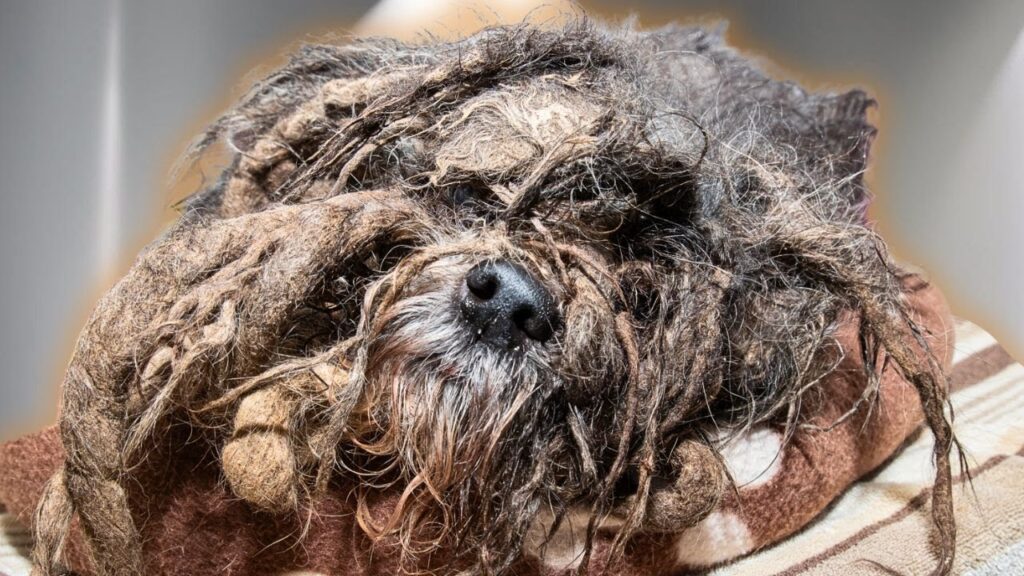
Severely matted dog before and after professional grooming transformation
Why Severe Matting Is More Than a Cosmetic Problem
Severely matted fur isn’t just untidy—it can cause pain, restrict movement, trap dirt and moisture, and even hide skin infections or parasites. In extreme cases, professional groomers may need to remove the entire coat to safely relieve the dog’s discomfort. This remarkable transformation highlights the importance of regular coat maintenance and early grooming.
If your dog spends a lot of time outdoors, routine grooming should be combined with parasite prevention. Read our FRONTLINE Plus Flea & Tick for Large Dogs Review:
Dogs with thick or long coats also benefit from staying active between grooming sessions. Our Dog Exercise Planner AI can help you create healthy daily routines that support your dog’s overall wellbeing:
A healthy coat also starts with the right diet. Visit our Dog Nutrition section for articles about feeding, supplements, and maintaining healthy skin and fur:
External Authority Link
Professional groomers and veterinarians recommend brushing your dog’s coat regularly to prevent painful mats and detect skin problems early. The ASPCA Dog Grooming Guide explains the basics of brushing, bathing, nail care, and coat maintenance:
FAQ
Why is dog matting dangerous?
Severe matting can pull on the skin, trap moisture and bacteria, restrict movement, and hide wounds or parasites. Regular grooming helps prevent these problems.
Can badly matted fur be brushed out?
Light mats may be removed with careful brushing, but severe matting often requires professional grooming to avoid causing pain or injury.
How often should long-haired dogs be groomed?
The ideal schedule depends on breed and coat type, but regular brushing and professional grooming every few weeks can help prevent heavy matting.