Treats are the easiest way to tell a puppy “yes, that is exactly what I wanted”. They are also an easy way to upset a small stomach or add too many calories. This guide explains which kinds of treats suit puppies, what to check on the label, and how many you can give without ruining dinner.
What makes a good puppy treat
- Small. For training, a treat the size of a pea is enough. Your puppy should swallow it in a second and look at you for the next one.
- Soft. Puppy teeth and jaws are still growing. Soft treats are also faster to eat during training.
- Simple ingredients. A clear protein first, a short list, no added sugar, no artificial colors.
- Made for puppies or all life stages. Check the package. Some chews are only for adult dogs.
- Something your puppy really likes. The best treat in the world does not work if your puppy is not interested.
Types of puppy treats
Soft training treats
The workhorse for teaching sit, name and recall. Easy to break into tiny pieces. Our review of Buddy Biscuits soft treats looks at one popular option.
Crunchy biscuits
Good as a bedtime snack or a reward after a walk, less handy for training because they crumble and take longer to eat. See our Fruitables pumpkin and blueberry biscuits review.
Freeze dried single ingredient treats
Chicken, beef liver or fish, dried with nothing added. Very tasty and great for difficult moments like the first trips to the vet. They are rich, so use very small pieces.
Chews
Chews keep a teething puppy busy, but choose carefully. Avoid cooked bones, very hard chews and anything your puppy can swallow whole. More on that in our guide to puppy teething toys.
Food from your kitchen
Small bits of plain cooked chicken, a few blueberries, a slice of carrot or cucumber. Cheap and healthy, as long as there is no salt, oil or seasoning. A handful of your puppy’s own kibble also works fine for easy exercises at home.
How many treats can a puppy have?
The usual rule is that treats should make up no more than 10 percent of your puppy’s daily calories. The American Kennel Club explains it simply: the 10 percent counts everything outside the main meals, including training treats and table scraps.
In practice:
- Break treats into tiny pieces. Your puppy cares about how many rewards they get, not how big they are.
- On busy training days, take part of the daily food ration and use it as rewards.
- Watch the waistline. You should feel the ribs easily without pressing.
Not sure how much food your puppy needs in the first place? See how often puppies should eat, or try our free dog nutrition planner.
Treats and foods to avoid
- Toxic foods: chocolate, grapes and raisins, onions, garlic, macadamia nuts, and anything with xylitol (a sweetener in some peanut butters, gum and sweets).
- Cooked bones: they splinter.
- Rawhide and very hard chews for young puppies: choking risk and too hard for growing teeth.
- Fatty leftovers like sausage, bacon or skin: they can upset the stomach.
- Treats with long lists of additives, sugar or colors.
Introduce one new treat at a time, in a small amount. If your puppy gets diarrhea or vomits, go back to what worked.
How to use treats in training
- Timing: give the treat within a second or two of the behavior you like.
- Different treats for different jobs: kibble for easy things at home, something special for hard things outside.
- Fade them out slowly: once a behavior is solid, reward every second or third time, and add praise and play.
- Start with name and sit. Our guide on teaching your puppy its name is a good first exercise.
Our experience: Chara and treats
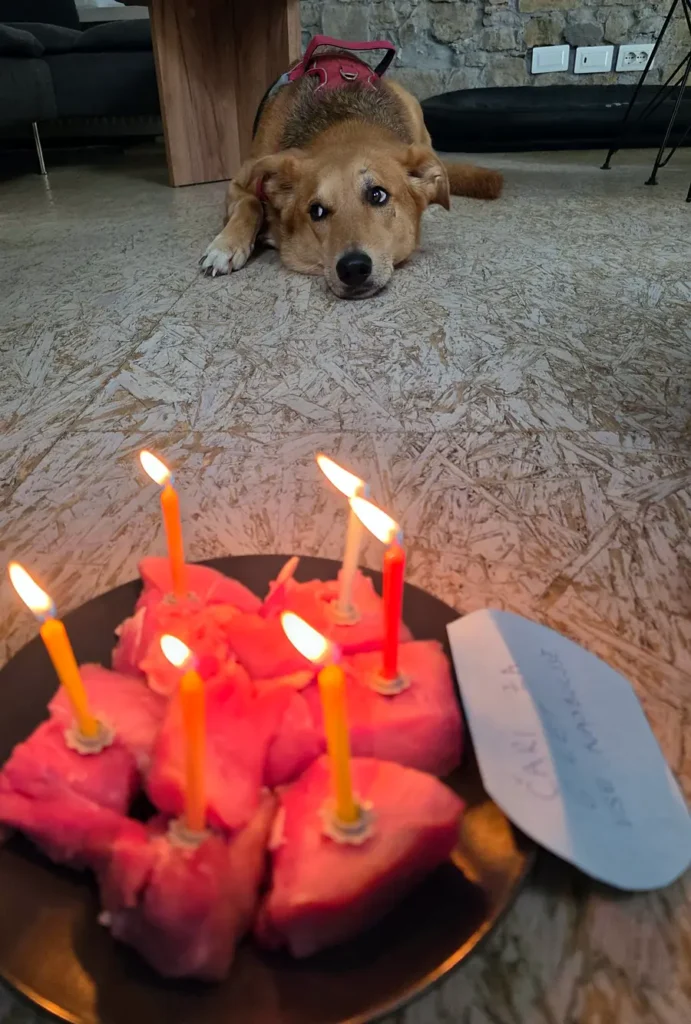
Chara eats mostly raw food plus a cold pressed dry food. Luckily she is not picky, she has tried many foods and liked most of them. Our rule is simple: anything new goes in a small amount first, and if it upsets her stomach, it does not come back. That rule works for treats too.
Frequently asked questions
When can puppies start eating treats?
Most puppies can have small soft treats from about 8 weeks, when they eat solid food well. Check the package for the minimum age.
Are adult dog treats safe for puppies?
Many are, but some chews are too hard or too big. Read the label and break treats into small pieces.
Can I use kibble as treats?
Yes. For easy exercises at home it works well and does not add extra calories.
My puppy has diarrhea after a new treat. What now?
Stop the treat and go back to their normal food. If the diarrhea lasts more than a day, or your puppy seems weak or stops eating, call your vet.