
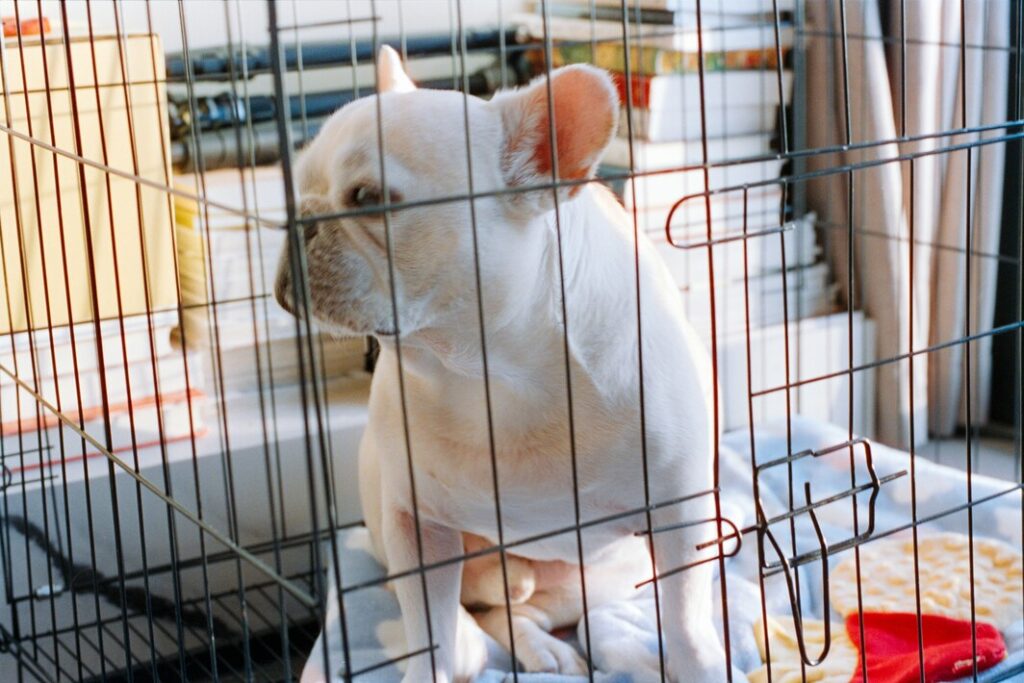
The first nights with a new puppy are rarely quiet. Your puppy has just left their mother and littermates, everything smells new, and the crate is a strange box. The good news: with the right setup most puppies settle within a week or two. Here is what to prepare, what a good bedtime routine looks like, and how to handle crying and night potty breaks.
Why a crate helps at night
Dogs like a small, safe place to sleep. A crate gives your puppy that den, keeps them away from cables and shoes while you sleep, and helps with house training, because most puppies try not to soil the place where they sleep. Used well, the crate becomes the spot your puppy chooses on their own.
A crate is never a punishment. If it is linked with being scolded, your puppy will fight it every night.
Before the first night
Choose the right size
Your puppy should be able to stand up, turn around and lie stretched out. Not much more. In a crate that is too big, many puppies sleep at one end and pee at the other. If you buy a crate for the adult size, use a divider and move it as your puppy grows. For big, strong chewers a sturdy model like the Oranland heavy duty crate lasts years.
Put the crate next to your bed
For the first weeks, keep the crate in your bedroom or right outside it. Your puppy can hear and smell you, which calms them. You will also hear when they need to go out. Later you can move the crate step by step to where you want it to stay.
Make it cozy
- A washable bed or old towels. Skip expensive beds until you know your puppy will not shred them.
- Something that smells of home: a T-shirt you wore, or a blanket from the breeder or shelter.
- A safe chew toy for the moment they wake up.
- A cover over part of the crate, so it feels like a den. Leave the front open for air.
Practice during the day
Do not make bedtime the first time your puppy sees the crate. Toss treats inside, feed meals in the crate with the door open, and close the door for a minute or two while you sit next to it. The American Kennel Club crate training steps follow the same idea: short, positive sessions first. Our crate training tips for a new puppy go through the daytime part in detail.
A bedtime routine that works
- Last meal two to three hours before bed. A full stomach right before bed means a full bladder at 2 a.m.
- Play, then calm. About an hour before bed, a short play session to use up energy, then quiet time.
- Last potty break right before the crate. Go out on a leash, wait, praise calmly when they go.
- Into the crate with a small treat. Use the same cue every night, for example “bedtime”.
- Lights off, stay boring. Talk softly if you need to, but do not start a party.
Puppies learn routines fast. After a few nights, the same steps in the same order tell them it is time to sleep. If you want a full plan for the day as well, see our first day schedule for a new puppy.
Night potty breaks by age
A common rule of thumb is that a puppy can hold their bladder about one hour for every month of age. An 8 week old puppy will usually need to go out once or twice a night. Around 4 months many puppies sleep six or seven hours, and most sleep through the night by about 5 or 6 months.
Keep night breaks short and dull:
- Carry or lead your puppy straight outside to the same spot.
- No play, no long talk, dim lights.
- Praise quietly after they go, then straight back into the crate.
If you set an alarm for the first weeks, you can take your puppy out before they wake up crying. Then stretch the time by 15 to 30 minutes every few nights.
When your puppy cries
Some crying is normal in the first nights. The question is why your puppy is crying.
- Needs to pee: crying after a few hours of sleep usually means this. Take them out, quietly.
- Lonely or unsure: crying right after you turn off the light. Put your fingers to the crate, speak softly, stay close. Do not take them out to play.
- Testing: if you open the door every time they bark, they learn barking opens doors. Wait for a few seconds of quiet before you respond, unless it may be a potty need.
Our guides on puppy crying at night and barking in the crate cover more reasons and fixes.
Our experience: Chara’s first nights
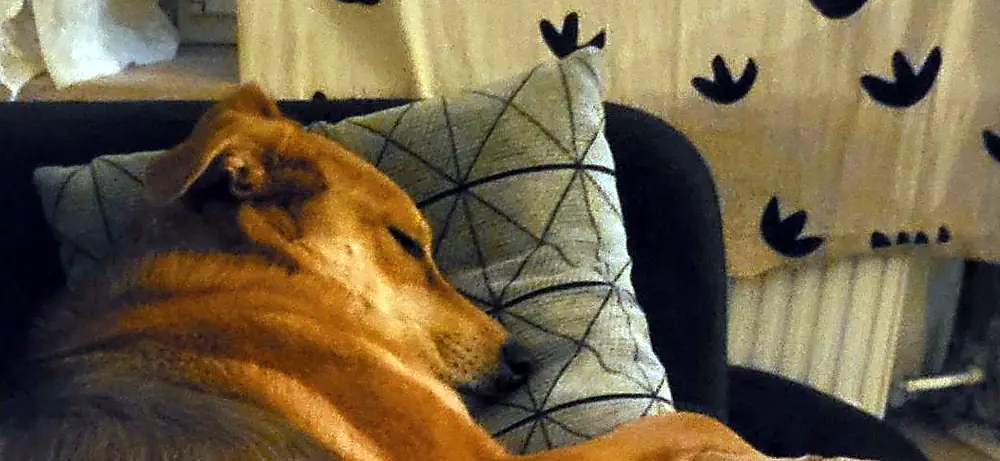
To be honest, Chara never needed a crate. She came to us from a shelter at two months old and felt at home right away. She just wanted to play, her teeth were sharp and she chewed on everything. Every puppy is different, though. If your puppy is more nervous, or you need to keep them safe from cables and shoes at night, a crate next to your bed is a kind way to do it.
Common mistakes
- Too much freedom too soon. A puppy who sleeps loose in the house will find a corner to pee in.
- Water bowl in the crate all night. Offer water in the evening, then remove it about an hour before bed. Ask your vet if your puppy has any health issue or the weather is hot.
- Exciting night breaks. Play at 3 a.m. teaches your puppy that 3 a.m. is fun.
- Giving up after two nights. It takes most puppies one to two weeks to settle.
Frequently asked questions
Should I ignore my puppy crying in the crate at night?
Not completely. Young puppies may really need to go out. Respond calmly, take them out if it may be a potty need, and go back to bed without play.
Should I put a puppy pad in the crate?
Usually no. It teaches your puppy that peeing in the crate is fine. If your puppy cannot last the night yet, take them out instead.
How long does crate training at night take?
Most puppies sleep calmly in the crate after one to two weeks of a steady routine. Sleeping through without a potty break comes later, usually around 4 to 6 months.
Can my puppy sleep in my bed instead?
That is your choice. Many owners start with a crate next to the bed and decide later. Changing the rules later is harder than starting with a crate.