
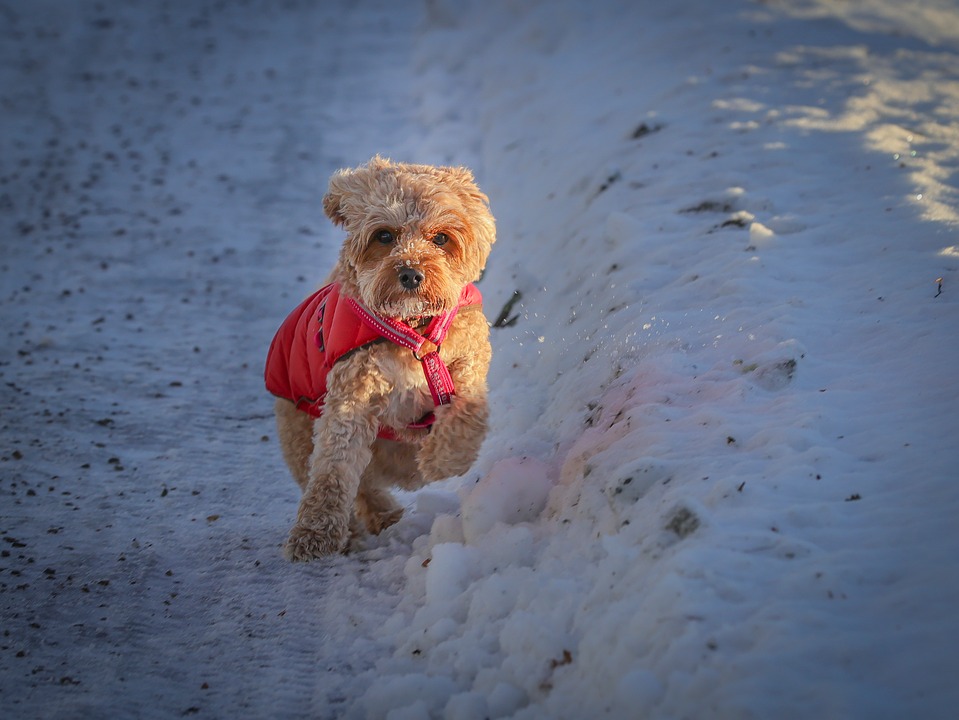
A good harness makes the first walks easier for you and safer for your puppy. A bad one rubs, slips off or teaches your puppy that pulling works. This guide explains the types, how to measure, and how to check the fit at home, so you can pick a harness that still works when your puppy grows.
Harness or collar for a puppy?
A collar is fine for carrying an ID tag. For walking, most trainers prefer a harness for young dogs. When a puppy pulls or lunges on a collar, all the pressure lands on the neck and throat. A harness spreads that force over the chest and shoulders. Puppies pull a lot while they learn, so this matters more for them than for a calm adult dog.
A harness also gives you a better grip if you need to lift your puppy over a puddle or guide them away from something on the ground.
The main types of puppy harness
Back clip
The leash clips on the back, between the shoulder blades. It is comfortable and easy to put on, and it does not tangle in the front legs. The downside: if your puppy pulls, a back clip can make pulling easier, a bit like a sled harness. It suits calm puppies and dogs that already walk nicely.
Front clip
The ring sits on the chest. When your puppy pulls, the leash turns them gently back toward you. This is the most useful type for puppies that are still learning leash manners.
Dual clip (no pull)
A ring on the chest and one on the back. You use the front ring while you train loose leash walking and switch to the back ring later. Most good no pull harnesses work this way. We reviewed two of them: the rabbitgoo no pull harness and the Bolux no pull harness for small dogs.
Step in or over the head
Step in harnesses are handy for puppies that do not like things going over their head. Over the head vests are usually quicker to put on and easier to adjust well. Pick the style your puppy tolerates best, since a harness you struggle with every day becomes a reason to skip walks.
How to measure your puppy
You need a soft tape measure and two numbers.
- Chest (girth): the widest part of the rib cage, just behind the front legs. This is the most important number.
- Neck: around the base of the neck, where it meets the shoulders, not high up like a collar.
Compare both numbers with the size chart of the exact harness you want. Sizes are not standard between brands. If your puppy falls between two sizes, choose the larger one and adjust it down. Puppies grow fast, so remeasure every few weeks during the first months.
How to check the fit
- Two fingers: you should be able to slide two fingers under every strap, but it should not be loose. The American Kennel Club fitting guide suggests starting a bit loose and tightening gradually.
- No rubbing behind the front legs: the chest strap should sit about a hand width behind the armpits, so it does not chafe when your puppy runs.
- Shoulders free: look at your puppy walking from the side. The straps should not cross the point of the shoulder or limit the stride.
- The escape test: gently pull the harness forward over the head. If it slides off, tighten it. Puppies are very good at backing out of loose harnesses, usually at the worst moment.
Recheck the fit after a bath, after a growth spurt, and whenever you see red patches or missing fur under the straps.
What else to look for
- Padding at the chest and under the belly, especially for short coated puppies.
- Several adjustment points, ideally four, so the harness can grow with your puppy.
- Metal leash rings instead of plastic.
- Reflective trim for dark winter evenings.
- A handle on the back, useful for big puppies and for getting into the car. For car rides, use a proper restraint such as a dog seat belt clipped to the back ring, never to a collar.
- Easy to wash. Puppies find every puddle.
Getting your puppy used to the harness
Most puppies need a few short, happy sessions before a harness feels normal.
- Show the harness, let your puppy sniff it, give a treat. Repeat a few times.
- Put it on for a few seconds, treat, take it off.
- Leave it on during a meal or a short play session indoors.
- Clip on the leash at home and walk a few steps in the hallway before going outside.
Once the harness is easy, start with our tips for the first walk. A harness helps, but it does not teach loose leash walking by itself. Stop when your puppy pulls, reward when the leash is slack, and keep the first walks short.
Our experience: Chara’s harness
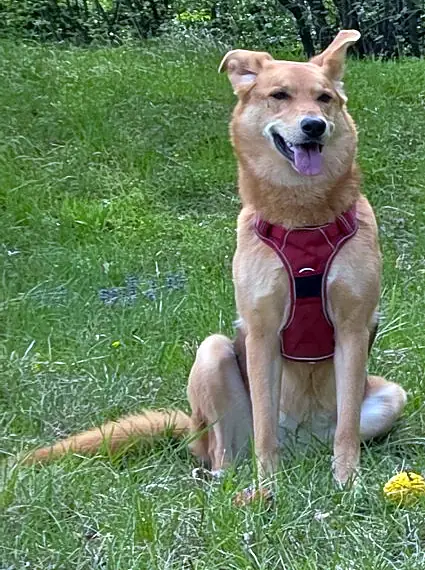
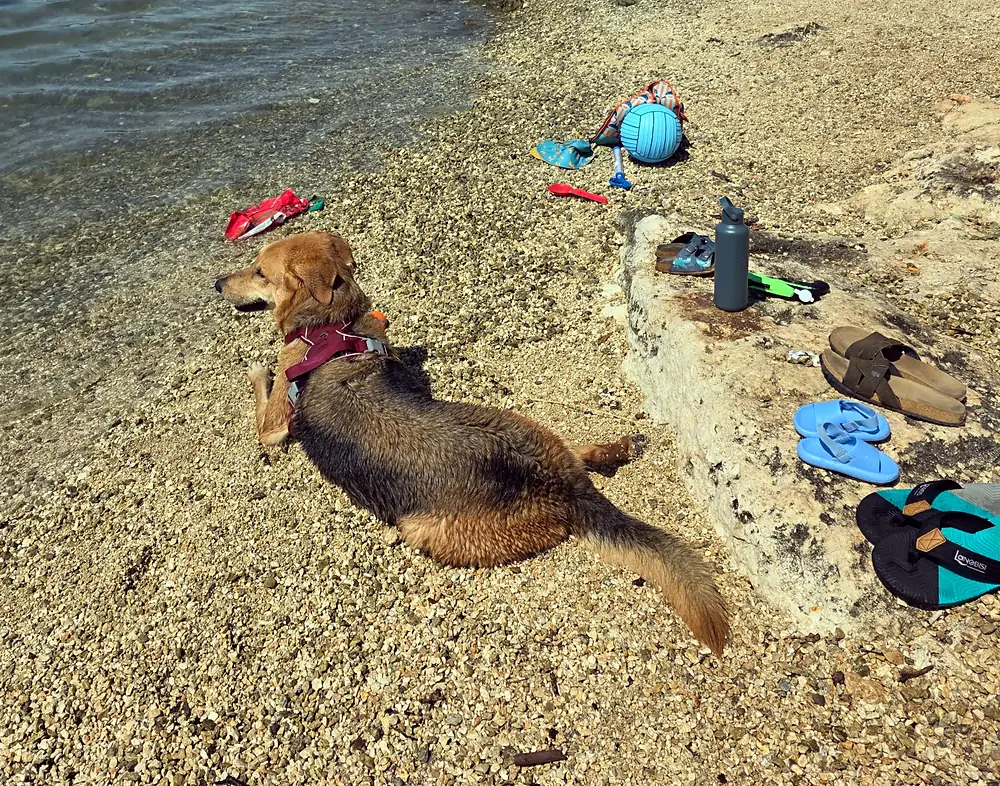
Chara is a six year old shelter dog, a German Shepherd mix of about 32 kg, and she wears the rabbitgoo no pull harness on our daily walks. With the leash on the front ring she pulls a lot less than she used to. The harness also survives everything she does, including swimming in the sea and rolling in the sand right after.
Frequently asked questions
At what age can a puppy wear a harness?
As soon as your puppy goes outside on a leash, usually from about 8 weeks. Start with short sessions at home first.
Can a puppy wear a harness all day?
Better not. Take it off at home, so it does not rub and does not catch on furniture or crate bars. A flat collar with an ID tag is enough indoors.
Does a no pull harness hurt?
A well fitted front clip harness should not. It works by turning your puppy, not by squeezing. Avoid harnesses that tighten around the chest or legs when the dog pulls.
How often do I need a new size?
That depends on the breed. Small breeds may keep one harness for months, large breed puppies can outgrow one every few weeks. An adjustable model saves money.