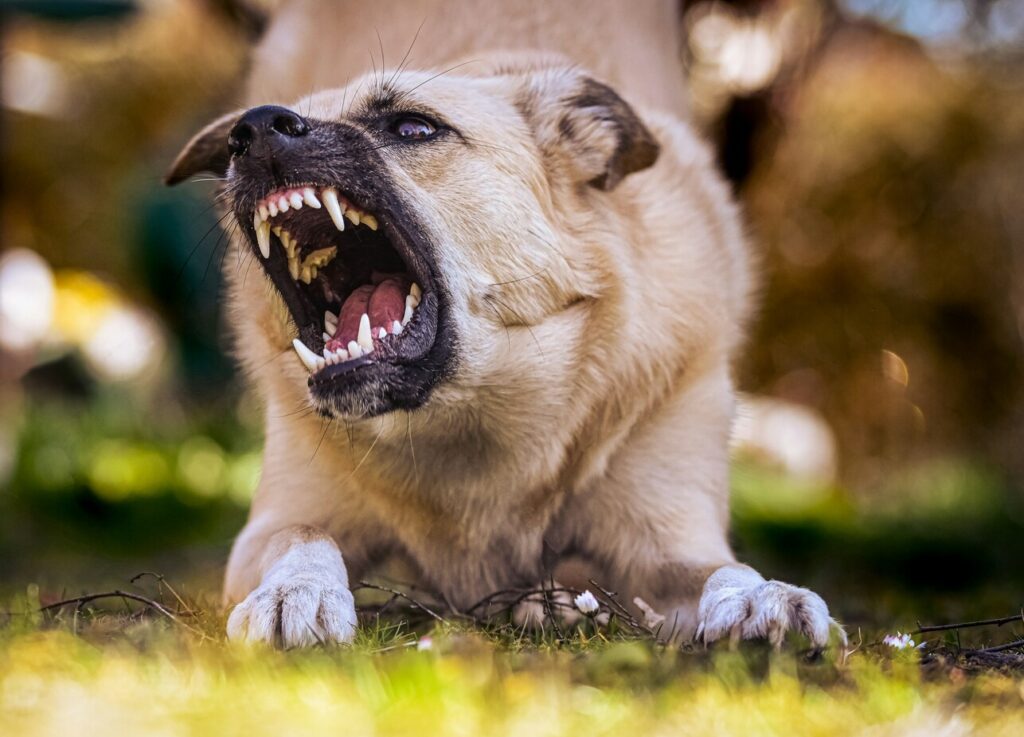
Sharp little teeth on your hands, your sleeves and your ankles: puppy biting is one of the most common reasons new owners lose their patience. It is also completely normal. Here is when it usually stops, why puppies do it, and what you can do so it stops sooner and does not turn into a habit.
When do puppies stop biting?
For most puppies biting peaks between about 8 and 16 weeks, slowly drops while the adult teeth come in, and is mostly gone by about 6 to 7 months. VCA Animal Hospitals places teething between about 3½ to 4 and 6 months, and the ASPCA notes that the intense chewing phase usually ends by six months.
The age is only half the story. A puppy who learns early that teeth on skin ends the game will be gentle much sooner. A puppy who gets a fun reaction every time they bite can keep mouthing as a teenager. Breed plays a role too. Herding and retriever puppies often use their mouths more.
If your puppy is around three months old, our article on puppy biting at 12 weeks looks at that stage in detail.
Why puppies bite
- Exploring. Puppies use their mouths the way babies use their hands.
- Teething. New teeth hurt, and chewing helps. See our guide to the best puppy teething toys.
- Play. Littermates play by biting each other. Your hands are the new littermates.
- Overtired. A puppy who bites harder and harder in the evening often needs a nap, not more play.
- Attention. If biting always makes you react, your puppy will do it more.
What helps: five habits that work
1. Teach a soft mouth first
Bite inhibition means your puppy learns how hard is too hard. When teeth press on your skin, say a calm “ouch” or “oops”, freeze your hand and pause the game for a few seconds. Then continue. Pulling your hand away fast makes it more exciting and can tear your skin. The American Kennel Club recommends the same: stop the fun, keep your hand still, reward gentle play.
2. Always offer something better
Keep a toy in your pocket. When your puppy goes for your hand, offer the toy instead and play with that. Long tug toys work well because they keep teeth away from fingers.
3. Stop the game when biting continues
If your puppy keeps biting after the pause, calmly get up and leave for 20 to 30 seconds, or put them in their pen with a chew. No shouting. The lesson is simple: biting ends the fun.
4. Protect naps
Young puppies need 18 to 20 hours of sleep a day. Many “crazy biting” evenings end once the puppy gets a real nap in a quiet place. Our guide on how much a puppy should sleep has the numbers by age.
5. Do not use punishment
Tapping the nose, holding the mouth shut or rolling the puppy over can make them afraid of hands. Fearful dogs are more likely to bite later, not less.
Puppy biting ankles and feet
Moving feet trigger the chase instinct, especially in herding breeds. What helps:
- Stop walking. Moving feet are fun, still feet are boring. Stand still and wait.
- Reward walking next to you. Drop treats by your leg while your puppy walks calmly beside you.
- Give the chase another outlet. A flirt pole or a toy dragged on a rope lets your puppy chase something allowed.
- Wear shoes and long trousers for a while, so it hurts less and you stay calm.
Puppy biting visitors
Guests are exciting, and excited puppies bite. Prepare before the doorbell rings:
- Put your puppy behind a gate or in a playpen with a chew when guests arrive.
- Let them come out once they are calmer, on a leash at first.
- Ask guests to ignore your puppy until all four paws are on the floor, then greet them calmly.
- Give guests a toy to offer, not their hands.
- Keep visits short. A tired puppy bites more.
Jumping and biting often come together, so our tips to stop puppy jumping help here too. Children need extra care, see how to introduce a puppy to children.
Our experience: Chara’s sharp puppy teeth
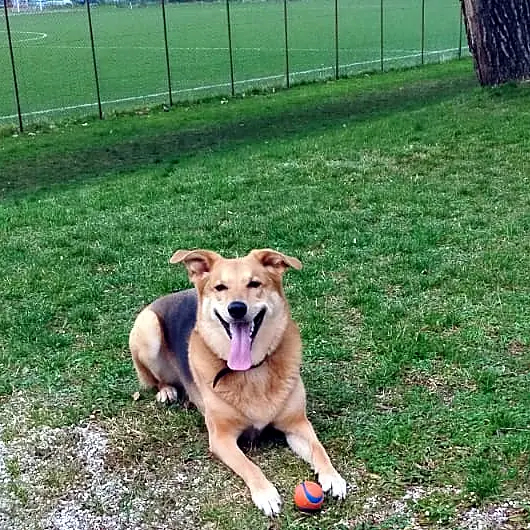
Chara came to us from a shelter at two months old. She was a really happy puppy, she just wanted to play, her teeth were sharp and she chewed on everything. She was never a careful little puppy. Today she is a six year old dog with a soft mouth who carries her ball very gently, so yes, it does pass.
When to get help
Talk to your vet or a positive reinforcement trainer if your puppy:
- bites hard enough to break skin often, even after weeks of consistent training,
- growls, stiffens or bites when you touch food, toys or their body,
- is still biting a lot after 7 or 8 months,
- bites when they seem afraid rather than playful.
These are not normal play bites, and an expert can help early, when it is easiest to change.
Frequently asked questions
Is it normal for my puppy to bite so much?
Yes. Mouthing is normal puppy behavior, especially between 8 and 16 weeks. What matters is that it gets softer and less frequent over time.
Do puppies grow out of biting on their own?
Many bite less after teething, but they do not automatically learn a soft mouth. A few weeks of calm, consistent practice makes a big difference.
Why does my puppy bite more in the evening?
Usually because they are overtired. Try a quiet nap in the crate or pen with a chew before the evening gets wild.
Should I yelp like a puppy when bitten?
A calm “ouch” and a pause works for many puppies. If yelping makes your puppy more excited, skip it and simply end the game.