If your puppy is chewing on everything, from table legs to your fingers, teething is a likely reason. Growing teeth hurt, and chewing helps. The right toys make this phase easier for both of you and protect your furniture. First, a quick look at the timeline, then what to look for in a teething toy.
When do puppies lose their baby teeth?
Puppies are born without teeth. The 28 baby teeth come in at around 3 to 6 weeks, and they are needle sharp. Between about 3½ to 4 and 6 months the baby teeth fall out and 42 adult teeth take their place, according to VCA Animal Hospitals. By around 6 to 7 months most puppies have their full adult set.
A rough order:
- About 12 to 16 weeks: the small front teeth (incisors) go first.
- About 4 to 5 months: canines and premolars.
- About 5 to 7 months: the back molars come in.
You will rarely find the baby teeth. Most puppies swallow them while eating, which is harmless.
Signs your puppy is teething
- More chewing than usual, on anything
- Red, slightly swollen gums, sometimes a little blood on toys
- Drooling
- Eating a bit slower, or dropping kibble
- Being grumpier or more mouthy, see when puppies stop biting
Retained baby teeth
Sometimes a baby tooth does not fall out and the adult tooth grows in next to it. This is more common in small and short nosed breeds. If you see two teeth in one spot, show your vet. A retained tooth is usually removed so the adult tooth can sit in the right place.
What makes a good teething toy
- Not too hard. A simple check many vets use: if you cannot press a fingernail into it, it is too hard for puppy teeth.
- The right size. Too big to swallow, small enough to carry. Size up for large breed puppies.
- Durable for your puppy. No small parts that can break off and be swallowed.
- Easy to clean, so you can wash it often.
- Interesting. Texture, a smell, or a place to hide food keeps a puppy chewing the toy instead of the sofa.
Types of teething toys that work
Soft rubber chew toys
Flexible rubber is the classic choice. Many have nubs that massage the gums. Hollow ones can be filled with wet food or plain yogurt and frozen.
Frozen toys
Cold numbs sore gums. Freeze a wet washcloth, twisted into a rope, or use a toy made for freezing. The ASPCA also suggests frozen washcloths and freezable toys for teething puppies. Always supervise, so pieces of cloth are not swallowed.
Nylon chews made for puppies
Firmer, long lasting, good for strong chewers. Choose puppy versions, which are softer. Our review of the Benebone Wishbone covers one well known shape that is easy to hold.
Rope and tug toys
Great for play and for keeping teeth away from your hands. Throw them away once they fray, because swallowed threads can cause problems in the gut.
Plush toys
Many puppies love a soft toy to carry and cuddle. Choose sturdy ones, like the tough plush squeaky toy or the HuggleHounds axolotl we reviewed, and take them away once the stuffing comes out.
What to avoid
- Cooked bones, antlers, hooves and very hard chews: they can crack teeth.
- Rawhide for young puppies: choking and blockage risk.
- Old shoes and household items: your puppy cannot tell old shoes from new ones.
- Small balls a large puppy could swallow.
- Toys with eyes, bells or other parts that can be chewed off.
Tips for the teething months
- Rotate toys every few days, so old toys feel new again.
- Swap, do not chase. If your puppy has something they should not, trade it for a toy and a treat.
- Puppy proof your home while teething lasts: cables, shoes and remote controls out of reach. Our guide to puppy chewing furniture has more ideas.
- Start tooth care now. Let your puppy get used to having their mouth touched. Our dental care tips explain how to start brushing.
- Dental chews: if you want them, look for products with the VOHC seal and check the minimum age on the package.
Our experience: Chara’s teething months
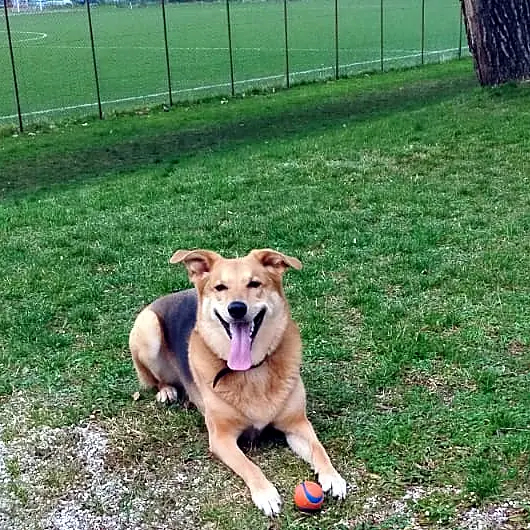
Chara joined us at two months old, with sharp puppy teeth and a strong wish to chew on everything. Looking back, what helped the most was giving her plenty to explore and chew, and not holding her back too much. Today, at six years old, her favourite toy is simple: a ball.
Frequently asked questions
How long does puppy teething last?
Usually from about 3½ to 4 months until 6 or 7 months, when all adult teeth are in.
Is it normal for a teething puppy to bleed?
A little blood on toys is normal when a tooth falls out. Heavy bleeding, bad smell or a puppy who stops eating should be checked by a vet.
Can I give my puppy ice cubes?
Many puppies enjoy them. Small pieces are best, and stop if your puppy crunches them very hard.
Do teething puppies sleep more?
Some do, and some are more restless. A frozen toy before a nap can help them settle.